
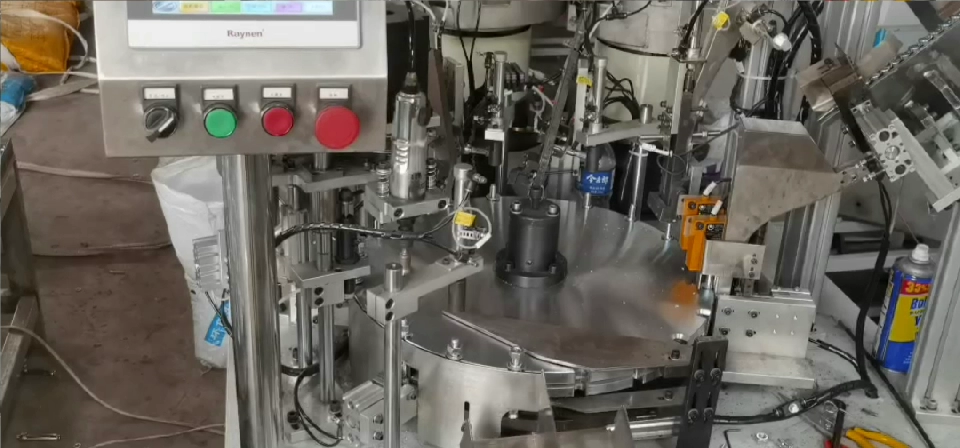
When buyers compare expansion bolt assembly machines, the first number they look at is the quoted output, usually expressed in pieces per minute. In practice, two machines with the same quoted speed can perform very differently after installation. The real output of an assembly machine is determined by five factors, and all of them should be discussed with the supplier before purchase.
1. Part quality and dimensional consistency. An automatic machine assumes that every sleeve, bolt, washer and nut is within tolerance. If the incoming parts vary in length, diameter or thread quality, feeding jams and insertion failures increase, and the operator has to stop the machine more often. Buyers who purchase parts from multiple suppliers often see lower real output than buyers who control part quality tightly. Standardizing part tolerances is the single most effective way to improve throughput.
2. Feeding stability of the vibratory bowls. The bowl feeder is the heart of the machine. A well-designed bowl separates tangled parts quickly and delivers them in the correct orientation without damaging threads. A marginal bowl design may work at low speed but fail when the machine is pushed. Testing with actual production parts, not sample parts, is essential.
3. Number of assembly stations. A basic machine may have four or five stations; a machine for double-sleeve mechanical anchors may have eight or more. Each additional station adds a step to the cycle, which reduces the theoretical pieces per minute but produces a more complex finished product. Buyers should compare output for the same product type, not across different product types.
4. Size changeover time. If a factory runs several bolt sizes, changeover time matters as much as cycle speed. Machines that require extensive tooling replacement and re-adjustment may lose hours per changeover, which is a significant loss when orders are small or mixed. Buyers should ask for the changeover procedure in writing and, ideally, watch it during factory acceptance testing.
5. Operation and maintenance discipline. Daily cleaning of the bowls and tracks, checking air pressure, replacing worn jaws and keeping the torque settings calibrated all preserve output over time. Machines that are maintained on a schedule hold their speed for years; machines that are only repaired when they break gradually lose output. A preventive maintenance schedule and spare parts kit should be part of the purchase.
Foshan Zhio Equipment Co., Ltd. supplies automatic assembly machines for expansion bolts, metal anchors and mechanical anchors, and works with buyers on tooling configuration, factory acceptance testing and after-sales support so that the machine reaches its rated output in real production conditions.