
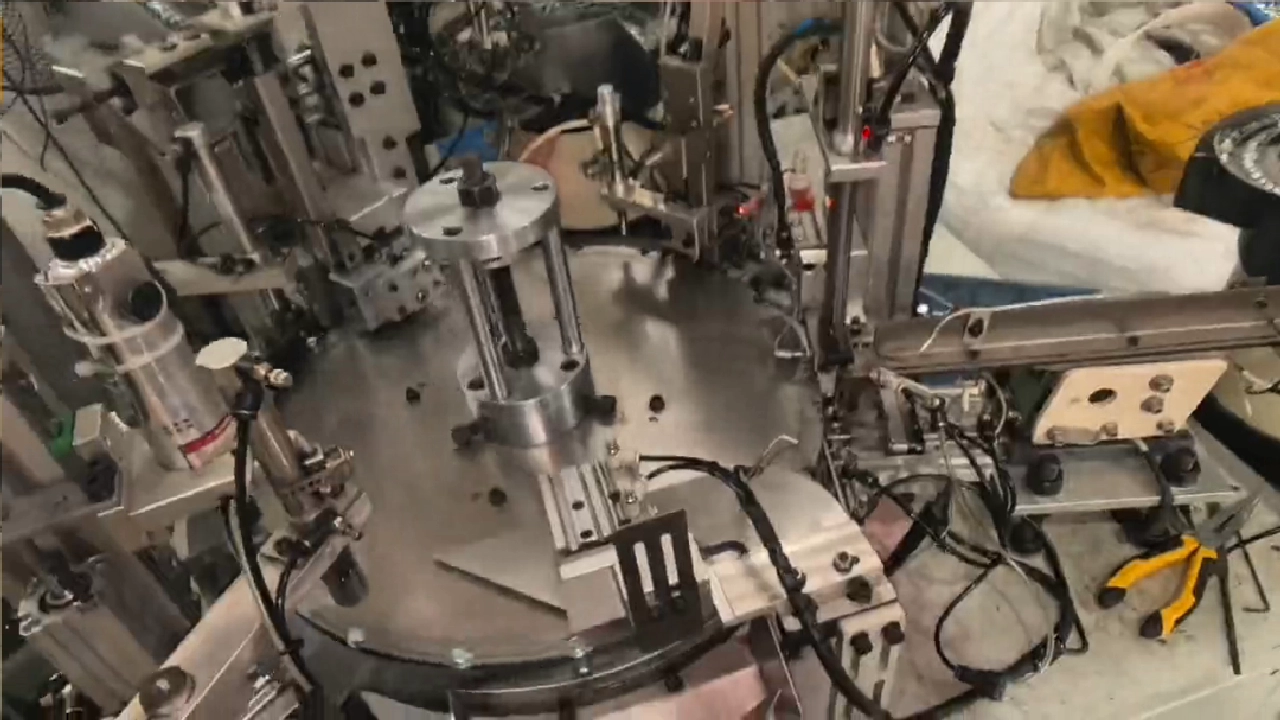
An assembly machine that is correctly specified will produce consistent output on day one. The harder question is what it looks like in month twelve. Most of the operational questions we receive concern three areas: changing over between bolt models, keeping wear parts in condition, and diagnosing the small faults that stop a line. Here is how to think about each.
1. How long does changeover between bolt models take?
Changeover time depends entirely on how much of the feeding and fixturing system is shared between models. There are three realistic cases:
- Same bolt family, different length. Usually a matter of adjustment rather than replacement — track width, stop positions and a control preset. Typically minutes.
- Same size, different component geometry. Bowl tooling and some guides usually need to be swapped. Expect a longer changeover, and plan it between production runs rather than mid-shift.
- Different bolt family entirely. This is effectively a re-setup, with bowl tooling, tracks and fixtures all changing. It should be scheduled as planned downtime.
The design lesson is that changeover time is a specification decision made before the machine is built. If fast changeover matters to your production plan, say so at quotation stage — it is much cheaper to design interchangeable tooling in than to retrofit it.
2. Which parts wear, and how often should they be serviced?
On an expansion bolt assembly machine the wear is concentrated where metal rubs against metal at speed. The usual suspects:
- Bowl feeder track and tooling. Continuous vibration and part contact polish and eventually reshape the track, which affects orientation reliability.
- Guide rails and orientation gates. Particularly where parts are rejected and recirculated.
- Pneumatic seals and cylinders. Seal life depends on air quality more than on cycle count.
- Insertion tooling and punches. Any station applying force will wear or deform over time.
- Sensors and mechanical gauges. Not wear in the classic sense, but they drift and need periodic verification.
Rather than a fixed calendar interval, the reliable approach is a short daily check of the obvious items — track condition, air pressure, sensor indication — plus a scheduled inspection at a frequency based on your actual cycle count. Record when each wear part is replaced; after a few months you will have your own real service interval instead of a generic estimate.
3. Why do jams happen, and how do we prevent them?
In most cases a jam is a feeding problem, not an assembly problem. The part never arrived at the station in the right orientation, or two parts arrived where one was expected. The common causes:
- Part geometry variation. If incoming component tolerances are wide, the bowl cannot orient reliably. This is the single most common cause and it is a supply quality issue, not a machine issue.
- Worn or contaminated track tooling. Polished edges and accumulated debris both change how parts slide.
- Incorrect bowl tuning. Feed rate set too high for the part geometry causes parts to ride in the wrong posture.
- Low or fluctuating air pressure. Transfer and insertion stations then act inconsistently.
The prevention checklist is correspondingly simple: control incoming part tolerance, clean and inspect the track on a schedule, keep the bowl tuned to the correct feed rate rather than the maximum one, and stabilise air supply. A machine that jams repeatedly on well-made parts usually has a bowl tuning problem; a machine that jams on some batches but not others usually has an incoming component quality problem.
4. What are the most common faults and what do they indicate?
Fault symptoms map fairly predictably onto causes:
- Machine stops with parts in the transfer track. Almost always orientation sensing — a part in the wrong posture or a sensor that has drifted out of adjustment.
- Assembled bolts fail a tightness or seating check. Insertion force is inconsistent. Check air pressure and cylinder condition before looking at the control system.
- Output rate drops gradually over weeks. Progressive wear or contamination in the feeding path, not a control fault. This is the classic case where a scheduled cleaning restores the original rate.
- Intermittent stops with no obvious mechanical cause. Sensor drift or a loose connection. Intermittent electrical faults are the hardest to find; logging the stop condition helps enormously.
- Rejects increase after a component supplier change. Component tolerance. Compare the new batch against the previous one before adjusting the machine.
5. How should operators be trained?
Operator training should cover four things and nothing more: safe start and stop, how to clear a jam without damaging tooling, which adjustments operators may make and which are locked, and what to record when the machine stops. The most common operational mistake is operators adjusting the bowl feed rate to clear a jam, which mistunes the machine and causes the next problem. Draw the line clearly between operator-level actions and maintenance-level actions.
6. What spare parts should be kept on hand?
Downtime is usually caused by waiting for a part rather than by the failure itself. For an export customer, a small on-hand set makes a disproportionate difference: the most frequently replaced guide and track components, pneumatic seals and cylinders for the insertion stations, a spare set of critical sensors, and any insertion tooling that is known to wear. Everything else can be ordered on demand.
7. How often should output be re-validated?
After any changeover, after replacing wear parts, and after a supplier change on incoming components. Re-validation means running a known quantity and checking three numbers: pieces per minute, reject rate, and assembly consistency. If those three stay within your tolerance, the machine is in specification. If output has quietly drifted down, you will catch it here rather than in a missed shipment.
The short version
Keep the feeding path clean and correctly tuned, control your incoming component tolerance, keep a small set of wear parts on the shelf, and re-check output whenever something changes. Most of what looks like a machine reliability problem is actually a feeding or component quality problem — and both are far cheaper to fix than a control system fault.
For background on the assembly sequence these maintenance points refer to, see how an automatic expansion bolt assembly machine works. If you are still selecting a machine, internal versus external expansion bolt assembly machines covers orientation, and five factors that determine machine output explains what caps your throughput.